Day 7 – Kennington to Canterbury

The final day and another 4:30am start.
The first hour or so was on road, and then I was back on the PW at Boughton Lees.

Soon after leaving the village, walkers along the NDW must choose whether to walk to Dover via Folkestone, or go via Canterbury. I, obviously was taking the Canterbury route, but as usual, the PW and the NDW often diverge.
The next main village was Godmersham, with a beautiful park, now owned by the Association of British Dispensing Opticians. Jane Austen often visited here and worked on Pride and Prejudice, Mansfield Park – which features Godmersham – and Emma. The current £10 note depicts Jane Austen with Godmersham House in the background.
Chilham is the next main place, with it’s castle, outside of which is the sculpture “Pilgrim Milestone” by Steven Andrews.
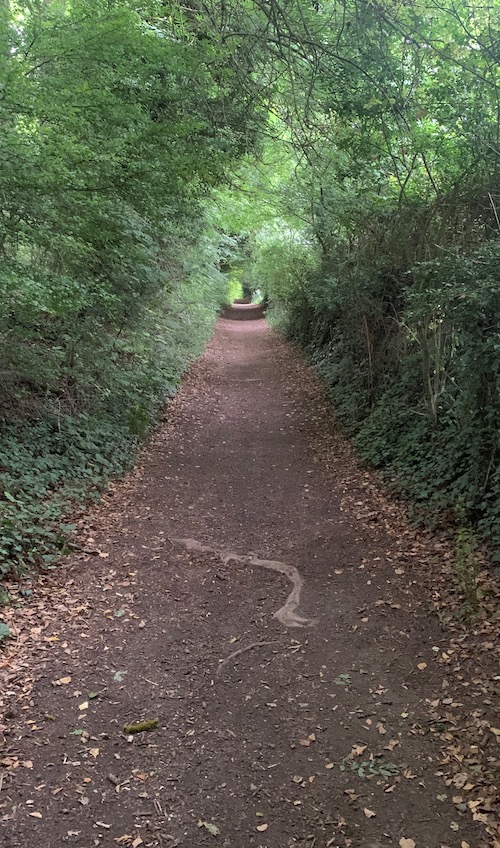

As we approach Canterbury the path passes some of the orchards that Kent is renowned.
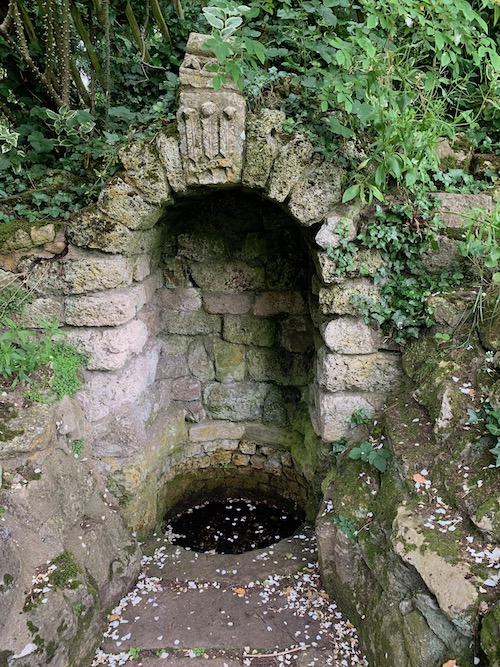
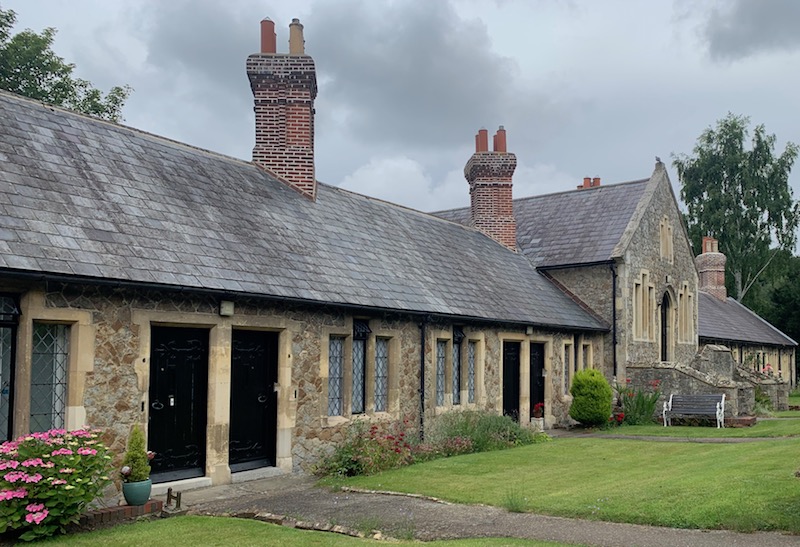
On the outskirts I went through Harbledown, passing St Thomas’ Well in the grounds of St Nicholas Hospital which was founded in 1084 for the relief of lepers. With the disappearance of leprosy the hospital was converted into the Almshouses of today.
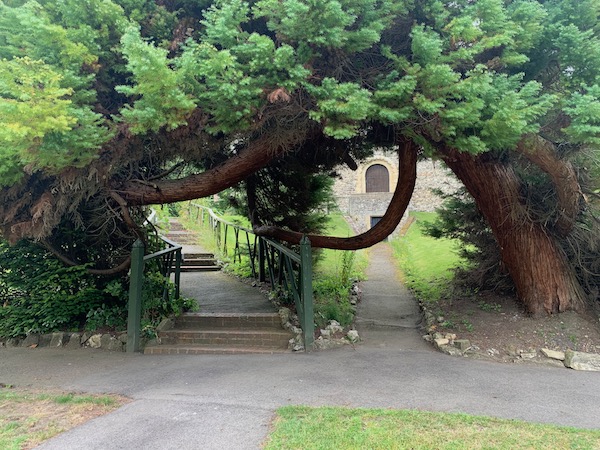
We are now entering Canterbury and quickly enter St Dunstan’s and the church is on the corner as one turns for the final mile or so into the centre.
I stopped at the church, and despite a notice saying Service in Progress, I crept in and was able to get a stamp in my passport. The church seems to have been quite full and I felt a little guilty about the slight disturbance I caused. But needs must, and I was nearly at the Cathedral.

One important piece of history associated with St Dunstan’s Church is that it is here that Henry II stopped on his pilgrimage, to change into a woollen pilgrim shirt and then walk barefoot to the Cathedral. Given that it now isn’t that far to go, and he would probably have been staying at palaces on the way, his penance, for having instigated murder, albeit perhaps unintentionally, doesn’t seem that great.
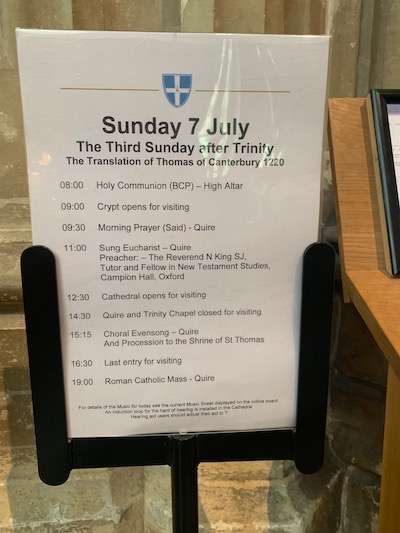
I arrived at the Cathedral a bit before 11am, having covered some 15 miles in just over 6 hours. I was able to gain free entrance to the grounds – normal price £12.50 – by flashing my Pilgrim Passport and went to the reception to obtain my final stamp. The receptionist was quite chatty and afterwards said I could go in, although some of it was closed due to the Services.

Despite the Sung Eucharist having just started, I noticed that they were letting a last few worshippers in and despite my shorts and rucksack, I was ushered into the Quoir and shown a place on the front row.
Towards the end of the service the congregation were taken up for the Communion, but the service sheet indicate that those not taking it, could have a Blessing instead.
Given my efforts over the last 7 days, I thought this entirely appropriate, making sure, as instructed, to keep my arms by my side. The priest noticed after a couple of seconds, and blessed me, rather than doing, the formal “Body of Christ” bit. However, the lady (I don’t know her official title) following with the wine didn’t and put it up to my lips. I attempted not to drink, but after she started tipping the goblet I decided that partaking was the best approach.
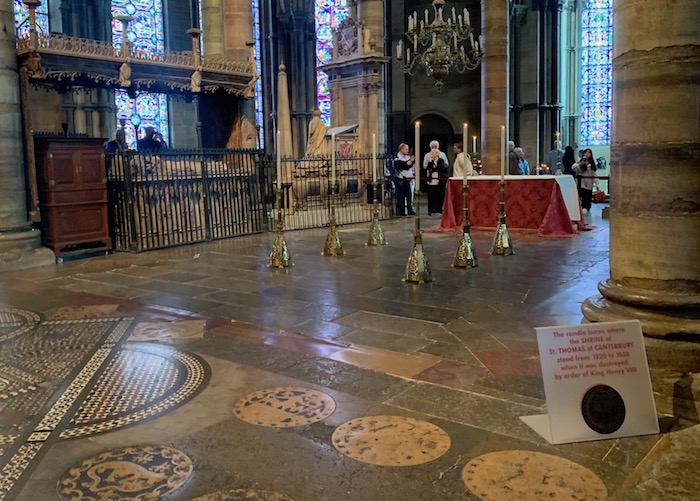
After the service the Cathedral was more fully opened, and I was able to walk around, backpack and all, before taking this photo of where St Thomas Becket’s Shrine use to be, before being destroyed on the orders of Henry VIII.
Afterwards, I made my way home by train, via Ashford and HS1 line into St Pancras International, tracing the route I had walked for the first 40 miles. The journey home was a lot quicker than the walk / pilgrimage there.